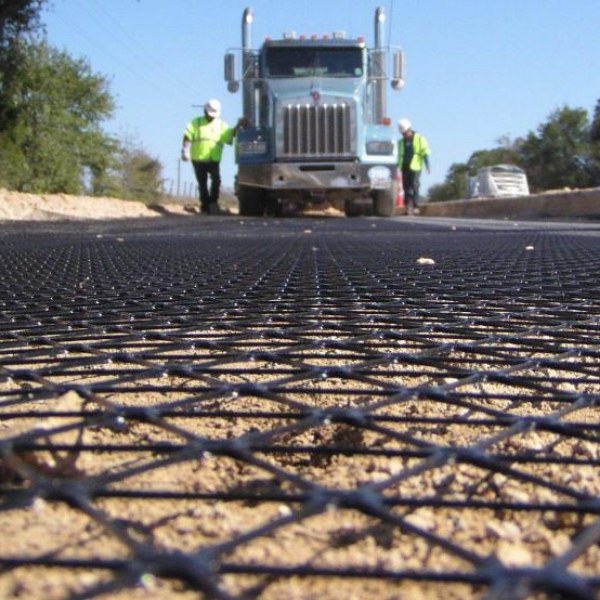
For road foundation reinforcement


We offer a variety of extruded plastic nets and woven plastic nets that can be used in various fields.

We post installation guides and videos to help you know better about plastic nets.

We are a leading Plastic Net Manufacturer & Exporter and will be your trustworthy partner.
Geogrids are made by extruding a polymer, such as polypropylene or high-density polyethylene, into sheets, which are then stamped into a regular mesh pattern and stretched. It is a geosynthetic material with an open grid-like appearance.
It can be stretched in different directions, and are generally divided into uniaxial geogrids and biaxial geogrids. In addition to, there are also the multi-axis plastic geogrids (triaxial plastic geogrids and quadaxial plastic geogrids). It is widely used for retaining wall reinforcement, highway, railway, slope foundation reinforcement and subgrade reinforcement, etc.
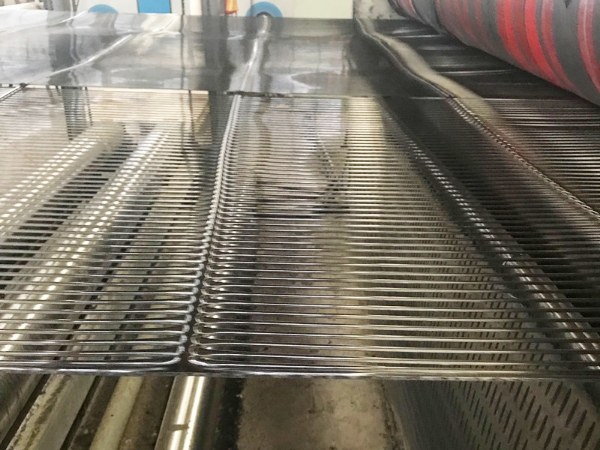
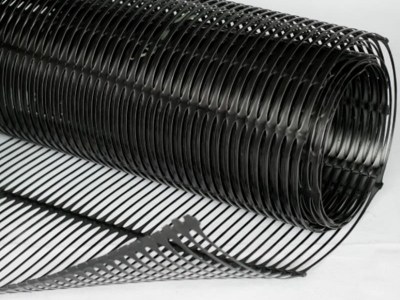
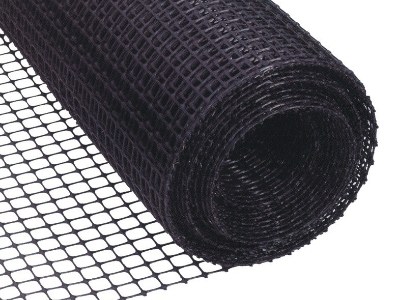

It is a geogrid that is stretched laterally to form a long rectangular grid pattern. Uniaxial plastic geogrid generally has a compact structure, good bending stiffness and high strength and is widely used in retaining walls, steep slopes, embankments, bridge abutments and collapse repair projects for reinforcement.
| Model | Content of Carbon Black (%) | Tensile Strength (kN/m) | Tensile Strength at 2% Elongation (kN/m) | Tensile Strength at 5% Elongation (kN/m) | Limit Creep Strength(kN/m) | Nominal Elongation (%) |
|---|---|---|---|---|---|---|
| TGDG35 | ≥ 2.0 | ≥ 35.0 | ≥ 10.0 | ≥ 22.0 | ≥ 15 | ≤ 10.0 |
| TGDG50 | ≥ 2.0 | ≥ 50.0 | ≥ 12.0 | ≥ 28.0 | ≥ 21 | ≤ 10.0 |
| TGDG80 | ≥ 2.0 | ≥ 80.0 | ≥ 26.0 | ≥ 48.0 | ≥ 30.2 | ≤ 10.0 |
| TGDG120 | ≥ 2.0 | ≥ 120.0 | ≥ 36.0 | ≥ 72.0 | ≥ 41 | ≤ 10.0 |
| TGDG160 | ≥ 2.0 | ≥ 160.0 | ≥ 45.0 | ≥ 90.0 | ≥ 49 | ≤ 10.0 |
| TGDG200 | ≥ 2.0 | ≥ 200.0 | ≥ 56.0 | ≥ 112.0 | ≥ 64 | ≤ 10.0 |
| Model | Content of Carbon Black (%) | Tensile Strength (kN/m) | Tensile Strength at 2% Elongation (kN/m) | Tensile Strength at 5% Elongation (kN/m) | Limit Creep Strength(kN/m) | Nominal Elongation (%) |
|---|---|---|---|---|---|---|
| TGDG35 | ≥ 2.0 | ≥ 35.0 | ≥ 7.5 | ≥ 21.5 | ≥ 16 | ≤ 11.5 |
| TGDG50 | ≥ 2.0 | ≥ 50.0 | ≥ 12.0 | ≥ 23.0 | ≥ 21 | ≤ 11.5 |
| TGDG80 | ≥ 2.0 | ≥ 80.0 | ≥ 21.0 | ≥ 40.0 | ≥ 31 | ≤ 11.5 |
| TGDG120 | ≥ 2.0 | ≥ 120.0 | ≥ 33.0 | ≥ 65.0 | ≥ 46 | ≤ 11.5 |
| TGDG160 | ≥ 2.0 | ≥ 160.0 | ≥ 47.0 | ≥ 93.0 | ≥ 60 | ≤ 11.5 |
It is a geogrid that is stretched both horizontally and vertically compared with laterally stretched uniaxial geogrid.
It is widely used in highways, railways, airports, docks for soft foundation treatment and in slopes, embankments, bank protection, road widening, highway pavement, airport road surface and other projects for reinforcement.
| Model | Content of Carbon Black (%) | Longitudinal/Transverse Tensile Strength (kN/m) | Longitudinal/Transverse Tensile Strength at 2% Elongation (kN/m) | Longitudinal/Transverse Tensile Strength at 5% Elongation (kN/m) | Longitudinal/Transverse Nominal Elongation (%) |
|---|---|---|---|---|---|
| TGDG1515 | ≥ 2.0 | ≥ 15.0 | ≥ 5.0 | ≥ 7.0 | ≤ 15.0/13.0 |
| TGDG2020 | ≥ 2.0 | ≥ 20.0 | ≥ 7.0 | ≥ 14.0 | ≤ 15.0/13.0 |
| TGDG2525 | ≥ 2.0 | ≥ 25.0 | ≥ 9.0 | ≥ 17.0 | ≤ 15.0/13.0 |
| TGDG3030 | ≥ 2.0 | ≥ 30.0 | ≥ 10.5 | ≥ 21.0 | ≤ 15.0/13.0 |
| TGDG3535 | ≥ 2.0 | ≥ 35.0 | ≥ 12.0 | ≥ 24.0 | ≤ 15.0/13.0 |
| TGDG4040 | ≥ 2.0 | ≥ 40.0 | ≥ 14.0 | ≥ 28.0 | ≤ 15.0/13.0 |
| TGDG4545 | ≥ 2.0 | ≥ 45.0 | ≥ 16.0 | ≥ 32.0 | ≤ 15.0/13.0 |
| TGDG5050 | ≥ 2.0 | ≥ 50.0 | ≥ 17.5 | ≥ 35.0 | ≤ 15.0/13.0 |
Multi-axial plastic geogrid is generally divided into 2 types, they are triaxial plastic geogrid and quad-axial plastic geogrid.
Triaxial Plastic Geogrid
It is a geogrid that is stretched along equilateral directions to form a triangular structure, and it has a higher tensile strength than uniaxial and biaxial plastic geogrids. It is widely used in the transportation field that requires high load-bearing capacity.
Quad-Axial Plastic Geogrid
It is the most stable and durable structure among all geogrids. PP quad-axial plastic geogrid has great UV resistance, chemical and biological resistance. In addition, its stretching along transverse, longitudinal and 45 degree directions provide the maximum tensile strength for geogrids.
| Model | Content of Carbon Black (%) | Tensile Strength (kN/m) | Tensile Strength at 2% Elongation (kN/m) | Tensile Strength at 5% Elongation (kN/m) | Nominal Elongation (%) | Secant Modulus at 2% Strain (kN/m) | Secant Modulus at 5% Strain (kN/m) |
|---|---|---|---|---|---|---|---|
| TGDXG10×4 PP | ≥ 2.0 | ≥ 10.0 | ≥ 4.0 | ≥ 6.0 | ≤ 13.0 | ≥ 200 | ≥ 120 |
| TGDXG15×4 PP | ≥ 2.0 | ≥ 15.0 | ≥ 6.0 | ≥ 8.0 | ≤ 13.0 | ≥ 300 | ≥ 160 |
| TGDXG20×4 PP | ≥ 2.0 | ≥ 20.0 | ≥ 8.0 | ≥ 16.0 | ≤ 13.0 | ≥ 400 | ≥ 320 |
For road foundation reinforcement
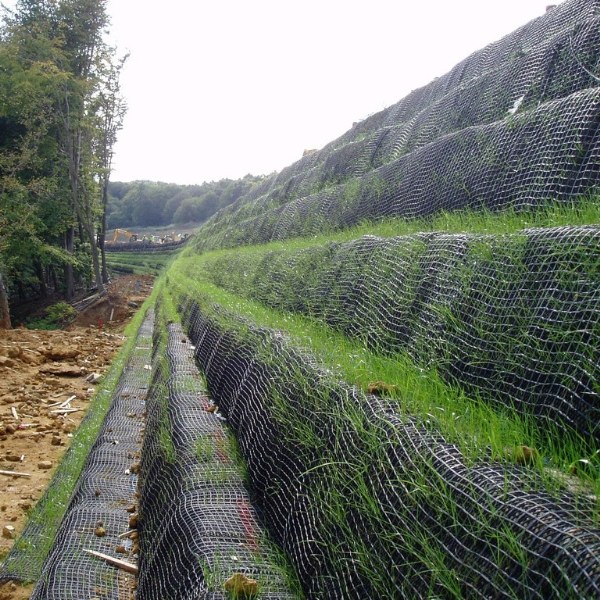
For slope reinforcement
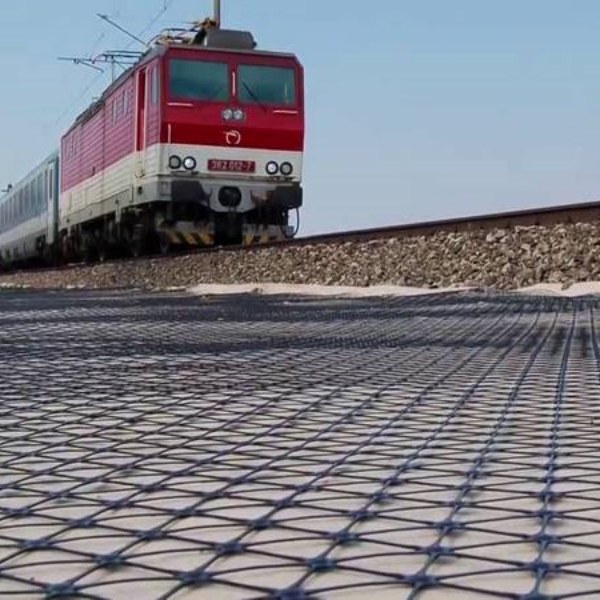
For railway foundation reinforcement
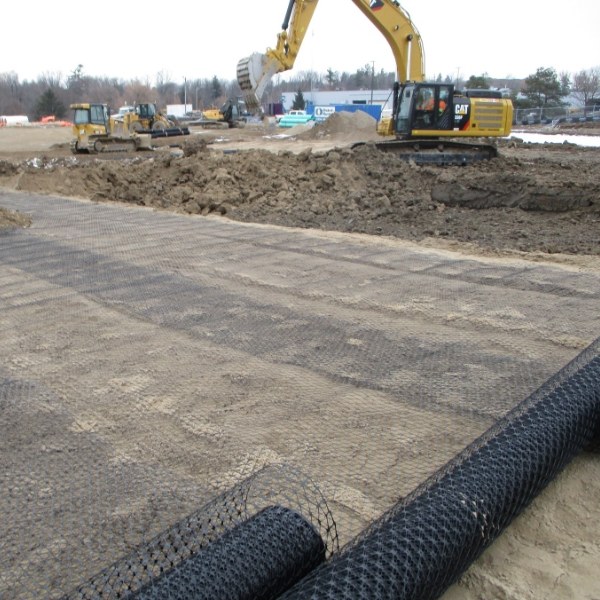
For parking lot foundation reinforcement
As a Plastic Net Manufacturer & Exporter, we have stable material supplier, experienced trade team and sound after-sales services. Our products are manufactured in strict accordance with ISO 9001 standards from material selection & quality control aspects.